Tokyo, Hakone, Kyoto and Osaka form the classic “Golden Route” for first-time visitors to Japan—and for good reason. These cities showcase the country’s most iconic sights, from neon-lit streets to centuries-old temples.
But today’s travellers are changing.
With more repeat visitors, longer stays, and growing awareness of overtourism, many travellers are now looking beyond the Golden Route in search of a more personal, local and immersive experience of Japan.
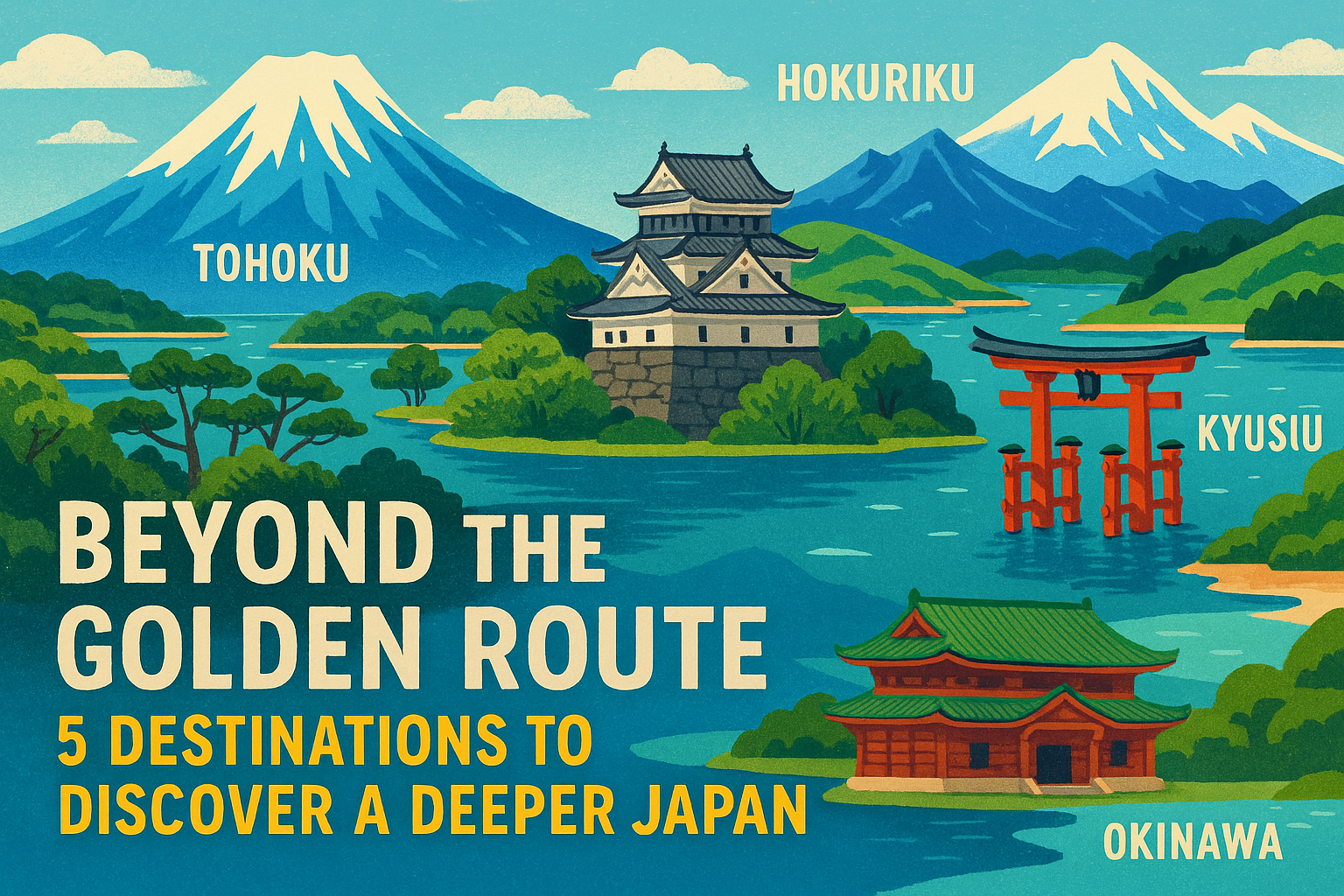
Here are five destinations beyond the Golden Route that offer exactly that—and why they deserve a place in your next Japan itinerary.
1. Hokuriku (Kanazawa, Toyama & Fukui)
Tradition, craftsmanship and refined regional culture
Hokuriku is often described as “Kyoto without the crowds”, but it is far more than a quieter alternative. Centred around Kanazawa, this region offers an exceptional balance of history, cuisine, craftsmanship and natural scenery.
What to see and do:
- Explore Kanazawa’s beautifully preserved samurai and geisha districts
- Visit Kenrokuen Garden, one of Japan’s most celebrated landscape gardens
- Discover traditional crafts such as gold leaf production, lacquerware and ceramics
- Enjoy outstanding seafood from the Sea of Japan, especially in winter
- Extend your journey to Toyama’s alpine scenery or Fukui’s Zen temples and rugged coastline
Hokuriku suits travellers who enjoy culture and food, but prefer a slower pace and a strong sense of place. With excellent rail connections between Tokyo and Kansai, it has become one of Japan’s most compelling alternatives to the classic route.
2. Tohoku
Quiet landscapes, spiritual sites and seasonal beauty
Tohoku represents a side of Japan that many visitors never see: expansive rural landscapes, deep traditions and a powerful connection to nature. It is ideal for travellers who value atmosphere over checklists.
What to see and do:
- Cruise through the pine-covered islands of Matsushima Bay
- Climb the stone steps to Yamadera Temple, dramatically perched on a mountainside
- Soak in historic onsen towns, often surrounded by forests or snow
- Experience festivals, local crafts and regional cuisine rooted in everyday life
- Enjoy striking seasonal contrasts, from cherry blossoms to heavy winter snow
Tohoku appeals to travellers who want to slow down, reflect, and experience Japan beyond its urban centres—especially those returning for a second or third visit.
3. Hokkaido
Wide open spaces and nature-led travel
Japan’s northernmost island feels worlds apart from the busy cities of Honshu. With vast landscapes, fresh air and exceptional food, Hokkaido is a natural choice for outdoor-focused and long-stay travellers.
What to see and do:
- Explore national parks, lakes and volcanic landscapes
- Enjoy summer hiking, flower fields and cycling routes
- Experience winter snow scenes, wildlife and seasonal activities
- Discover local food culture, including seafood, dairy and regional specialities
- Combine cities such as Sapporo with remote countryside stays
Hokkaido is particularly popular with travellers who want to combine Japan with nature, space and seasonal experiences, rather than dense sightseeing.
4. Kyushu
Volcanoes, hot springs and regional flavours
Kyushu offers some of Japan’s most varied scenery and some of its warmest hospitality. The region blends dramatic nature, excellent food and rich local identity, making it ideal for travellers seeking diversity within one area.
What to see and do:
- Wander through Fukuoka, known for its relaxed atmosphere and food culture
- Visit renowned onsen towns such as Beppu and Yufuin
- Experience volcanic landscapes around Mount Aso
- Explore southern Kyushu’s subtropical scenery and history
- Enjoy regional cuisine shaped by local ingredients and traditions
Kyushu works well for travellers who want strong regional character without sacrificing comfort or accessibility.
5. Okinawa
A different culture within Japan
Okinawa offers a completely different rhythm of travel. Once the heart of the Ryukyu Kingdom, the islands have their own history, language, cuisine and cultural identity, distinct from mainland Japan.
What to see and do:
- Relax on white-sand beaches and crystal-clear waters
- Learn about Ryukyuan history at castle ruins and local museums
- Enjoy a unique food culture influenced by both Japan and Southeast Asia
- Experience slower island life, ideal for families or relaxed itineraries
- Combine cultural exploration with time to unwind
Okinawa is perfect for travellers who want to balance cultural discovery with downtime—and for those curious to see how diverse Japan truly is.
A New Way to Travel Japan
Japan’s most famous sights will always be special. But the future of travel here lies beyond them—in regions where life moves more slowly, traditions feel closer, and encounters are more personal.
For travellers who have already seen the highlights, or who want to experience Japan more deeply from the start, these destinations offer a richer, more meaningful journey.